
Lakshanaapriya
Junior software developer • Hapusinfotech
Drupal Blog & Insights by Lakshanaapriya – Hapus Infotech
0
Blog
0
Likes
0
Comments
Lakshanaapriya
Junior software developer • Hapusinfotech
Intro
Hi, I'm Lakshanaa Priya, a Junior Software Developer at Hapus Infotech. I’m passionate about crafting clean, efficient code and enjoy collaborating with teams to deliver impactful digital solutions.
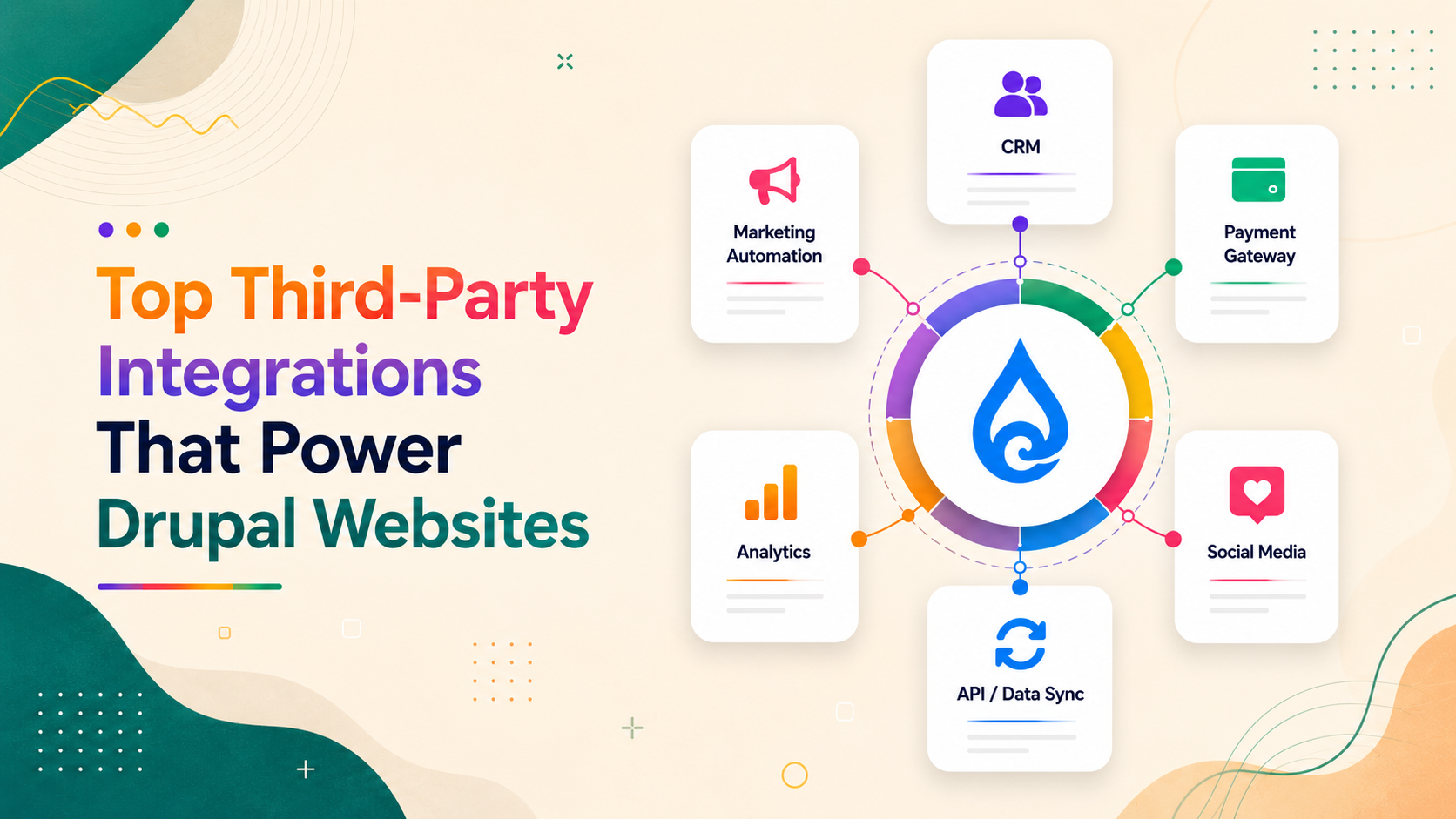
Top Third-Party Integrations That Power Drupal Websites
Modern websites rarely work in isolation. They connect with CRMs, marketing tools, payment gateways, analytics platforms, and social media networks to deliver seamless digital experiences. This is where Drupal third-party integration modules become incredibly powerful. They allow Drupal websites to communicate with external systems, exchange data smoothly, and automate workflows without complex custom development.In today’s connected ecosystem, choosing the right integrations can transform a basic Drupal site into a fully automated digital platform. From customer data syncing to marketing automation and API communication, Drupal offers a rich ecosystem of modules that make integrations reliable and scalable.In this guide, we’ll explore the most impactful third-party integrations Drupal websites commonly use, how these integrations work, and why they are essential for modern digital success.
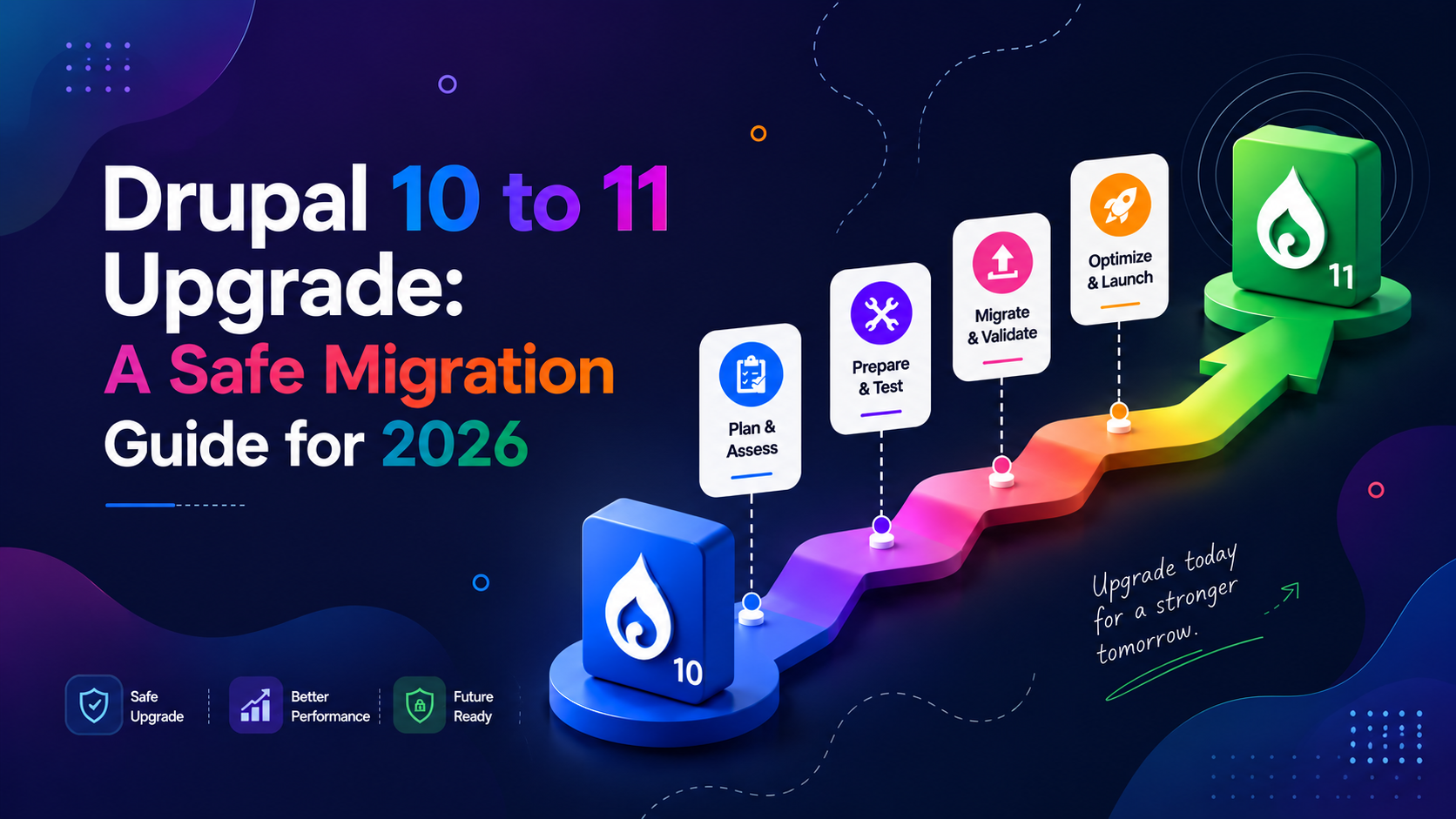
Drupal 10 to 11 Upgrade: A Safe Migration Guide for 2026
Upgrading your website from one major Drupal version to the next can be technical and overwhelming if you don’t plan it well. However, with the right guidance and a clear Drupal 10 to 11 upgrade strategy, you can transition smoothly without breaking your site. In 2026, this upgrade is crucial as Drupal 10 approaches end-of-life and new features and performance improvements in Drupal 11 make it a future-proof choice. In this guide, you’ll learn how to safely upgrade Drupal, understand the Drupal 11 upgrade checklist, and follow a structured Drupal upgrade process 2026 to minimize downtime and risk.
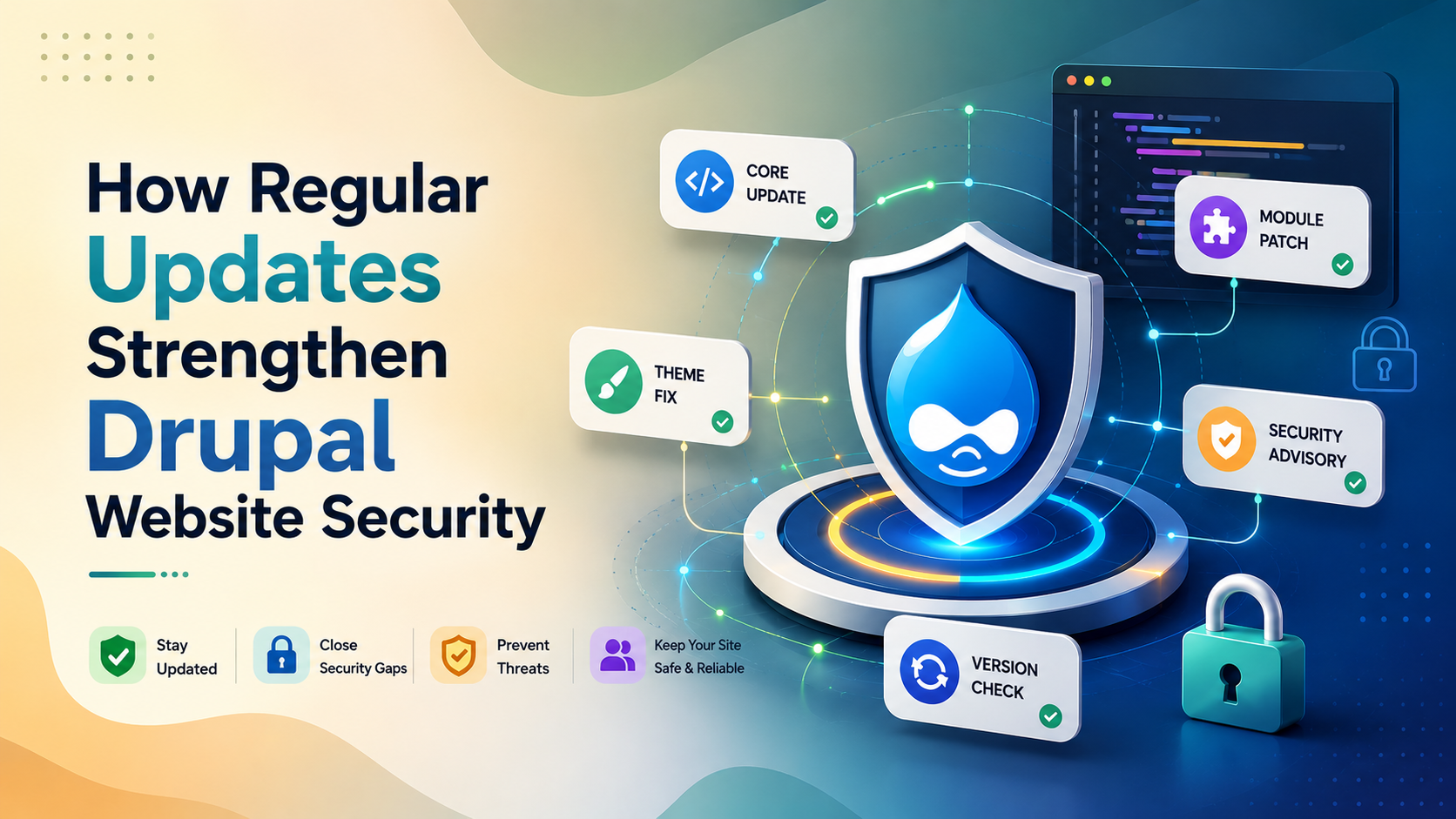
How Regular Updates Strengthen Drupal Website Security
Drupal websites are widely trusted by enterprises, government organizations, and growing businesses because of their flexibility and strong security framework. However, security is not a one-time setup. To keep Drupal websites protected against evolving cyber threats, regular updates play a critical role.Within the first few weeks of launching a site, new vulnerabilities may already exist in outdated code. This is why drupal security and timely updates are essential. Regular updates help close security gaps, prevent unauthorized access, and ensure Drupal websites remain reliable, compliant, and safe for users.In this blog, we’ll explore how regular updates strengthen Drupal website security, why they matter, and how businesses benefit from a proactive update strategy.
Why Drupal Website Need Regular Maintenance and Support
A Drupal website is a powerful digital asset for businesses that demand flexibility, security, and scalability. However, launching a Drupal site is only the first step. To keep it running efficiently, securely, and competitively, regular maintenance and ongoing support are essential. Without continuous care, even a well-built Drupal website can face performance issues, security risks, and outdated functionality.In today’s fast-changing digital environment, businesses cannot afford downtime, slow loading pages, or security vulnerabilities. This is why Drupal maintenance plays a crucial role in ensuring long-term success. From security updates to performance optimization, regular support ensures your website stays reliable and future-ready.
Must-Have Drupal Security Modules for a Safer Website
Drupal Security is no longer optional-it is a necessity for any organization running a modern website. As cyber threats continue to evolve, Drupal site owners must take proactive steps to protect their digital assets, user data, and brand reputation. Fortunately, Drupal’s powerful ecosystem offers specialized security modules that significantly strengthen site security and overall web security.In this guide, you’ll learn how to secure Drupal sites using the right modules, understand common security vulnerabilities, and apply best practices that align with enterprise-grade security needs. Whether you manage a business website, government portal, or content-heavy platform, this blog will help you build a safer Drupal environment.
Drupal Security Risks Explained & How to Eliminate Them
Drupal Security plays a critical role in protecting modern websites from cyber threats, data breaches, and service disruptions. Drupal is widely trusted by governments, enterprises, educational institutions, and healthcare organizations because of its robust framework. However, even a strong CMS can become vulnerable if security risks are ignored.In today’s threat landscape, understanding top security risks and knowing how to address them is essential to maintain website security. This guide explains common Drupal security risks, why they occur, and—most importantly—how to eliminate them effectively while keeping your site stable, compliant, and secure.
How Caching Boosts Drupal Website Speed & Performance
In today’s fast-paced digital world, users expect websites to load instantly. Even a one-second delay can reduce conversions, increase bounce rates, and impact search rankings. This is where Drupal website speed becomes a critical factor for success. One of the most effective ways to improve speed and deliver a smooth user experience is through caching.Caching is a powerful technique that reduces server load, improves response time, and enhances overall website performance. When implemented correctly, it plays a vital role in Drupal speed optimization and ensures your site can handle traffic efficiently.In this blog, we’ll explore how caching works, why it matters, and how it significantly improves website load time and performance.
Top Drupal Modules That Boost Website Performance & Speed
A fast website is no longer optional. For any Drupal website, speed directly affects user experience, search rankings, and conversions. One of the biggest advantages of Drupal is its flexibility, powered by powerful Drupal Modules that help improve caching, loading time, and overall site performance.In this blog, we explore the top Drupal Modules that boost website performance, explain how they work, and show how they improve website speed, scalability, and stability.Website performance plays a critical role in SEO and user satisfaction. Visitors expect pages to load quickly.
Top Industries That Benefit Most from Drupal Websites
Choosing a powerful content management system is critical for businesses aiming to build scalable, secure, and future-ready digital experiences. Drupal websites continue to stand out as a leading solution for organizations across many industries due to their flexibility, enterprise-level capabilities, and strong community support. In this blog, we’ll explore which sectors benefit the most from Drupal and why this platform is often the go-to choice for demanding digital environments.Whether you’re considering a Drupal website development project or exploring Drupal for enterprises, this guide is tailored to help you understand how different industries leverage the strengths of Drupal to drive online success.
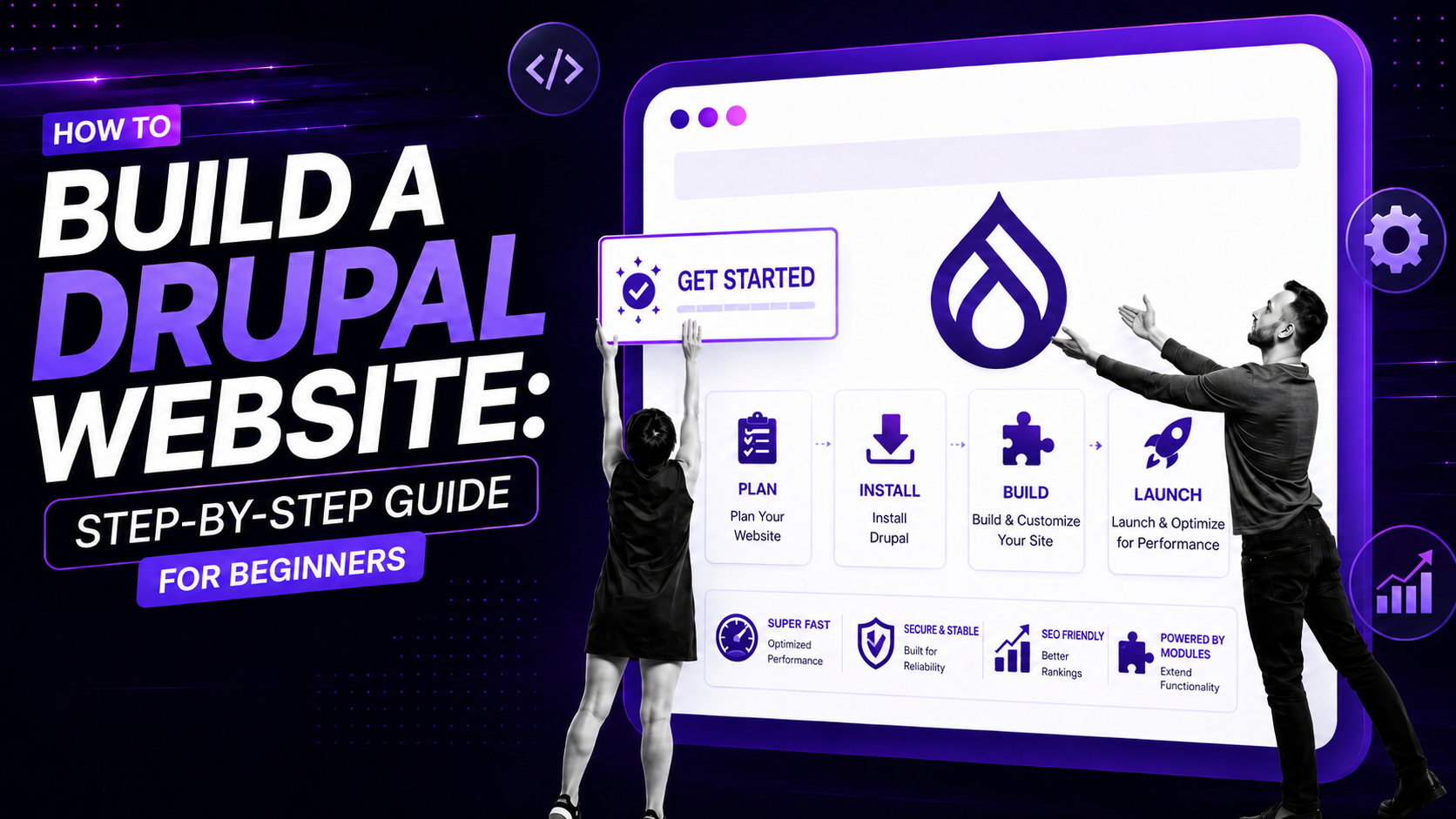
How to Build a Drupal Website: Step-by-Step Guide for Beginners
Your Complete Beginner-Friendly Walkthrough for Drupal Websites. If you’re ready to build Drupal websites from scratch, you’re in the right place. This step-by-step guide breaks down the entire Drupal website development process into clear, actionable steps — from planning your site and installing Drupal to launching and optimizing it for performance and SEO. Whether you’re a beginner or brushing up your skills, this blog covers everything you need in one place.Drupal is one of the most powerful open-source content management systems available today. Known for its flexibility, scalability, and enterprise-grade security, it’s a top choice for everything from blogs and small business websites to complex enterprise portals. What makes Drupal stand out is its modular architecture — you can extend functionality endlessly with modules and custom configurations, yet it remains stable and secure.
Drupal for Enterprises: A Smarter Web Development Choice
In today’s digital-first economy, enterprise organizations need more than just a visually appealing website. They require a platform that can handle scale, security, performance, integrations, and continuous growth. This is exactly where Drupal for enterprises stands out.Enterprises across industries—from healthcare and education to finance and government—choose Drupal because it offers unmatched flexibility, enterprise-grade security, and long-term scalability. When combined with strategic Drupal web development, it becomes a powerful foundation for building robust digital ecosystems.This guide explains why Drupal is considered a smarter web development choice for enterprises and how it supports complex business requirements without limiting innovation.
What Are the Must-Know Drupal 10 Features Before Upgrading?
Upgrading your website today is not just about staying updated—it’s about ensuring security, scalability, performance, and long-term growth. As older Drupal versions approach end-of-life, understanding Drupal 10 features becomes essential before making an upgrade decision.Drupal 10 is built to support modern digital experiences with improved performance, enhanced security, better accessibility, and a future-ready codebase. Whether you manage a business website, enterprise platform, or content-heavy portal, this guide explains why upgrading to the latest Drupal version matters.

Why Drupal Site Speed Matters More Than Ever for Conversions in 2025
In today’s digital world, people expect a website to load within 2–3 seconds. Anything slower—and they leave. This is not a theory. Google’s own research shows:A 1-second delay in page load can reduce conversions by 7%A 3-second delay increases bounce rate by 32%A 5-second delay loses more than half of your usersSlow websites aren’t just "annoying"—they shrink revenue, damage brand trust, and push customers to your competitors.Whether you're running an eCommerce store, a business site, or a content-heavy enterprise platform, page speed has a direct impact on revenue, SEO rankings, user experience, lead generation, and customer retention.If your website loads slowly—even for a few seconds—you are losing customers long before they see your product or service.Let’s break down how slow websites kill conversions and what you can do immediately to fix it.
Drupal vs WordPress: Best CMS Choice for 2026
Selecting the appropriate CMS is among the most crucial choices you'll make regarding your site. It can affect the security and performance, scaling, workflows for content, and even the long-term digital growth. With a variety of different content management systems in the market, Drupal and WordPress remain the most popular choices but they have distinct needs.If you're thinking of launching a new website or are considering the possibility of a redesign for 2026 or beyond, this article will aid you in understanding Drupal and WordPress strengths, weaknesses and the time when Drupal is the better long-term investment.
What Is a CMS? A Beginner’s Guide With Drupal as the Example
In today’s digital world, having a website isn’t enough — it needs to stay fresh, relevant, and updated.But here’s the problem: For many businesses, updating website content feels slow, expensive, and overly technical.Every small change — like swapping a banner image, editing a service description, or publishing a blog post — often means calling a developer, waiting for their schedule, and paying extra.This not only slows down your marketing but can make your website feel outdated fast.A Content Management System (CMS) solves this by giving you the freedom to manage your website without coding skills.
Websites That Sell While You Sleep: Building 24/7 Revenue Machines
Introduction – Your Website Should Be Your Hardest-Working EmployeeImagine this: it’s the middle of the night.Your office is dark, your team is resting, but your website is wide awake — answering queries, processing payments, confirming bookings, collecting leads, and even following up with potential customers.This isn’t a futuristic fantasy.This is what happens when your website is built with automation, intelligent design, and a conversion-first strategy.

Website vs Social Media: What Every Brand Owner Should Know
❝ If your business lives only on social media, it’s not a business — it’s a profile. ❞In 2025, it’s tempting to run your business entirely on Instagram, Facebook, or WhatsApp.After all, they’re free. They’re fast. They feel alive.But what happens when the algorithm shifts? When Meta decides your reach is too high for a free ride? When your page gets flagged, hacked, or buried beneath noise? No serious brand can afford to be platform-dependent.No strong brand exists without a website.
How Microinteractions Make Your Website Feel Alive
In a world of templated websites and cookie-cutter layouts, the details are what set truly engaging digital experiences apart. One of the most powerful tools in a designer's arsenal is the microinteraction. These are the tiny design moments that occur when a user hovers, clicks, scrolls, submits a form, or performs any minor action on your site. Though often unnoticed consciously, microinteractions create emotional impact, visual rhythm, and a sense of intuitive flow. They’re the heartbeat of a modern web experience.

Drupal Starter Themes vs Custom Themes for Your Project
Your website’s theme does more than define its appearance it impacts performance, branding, scalability, and how your users interact with your business. Choosing between a starter theme and a fully custom Drupal theme isn’t just a technical decision; it’s a strategic one. At HapusInfoTech, we’ve built both kinds of solutions across industries — and we help every client make the right call based on what truly serves their business long-term.
What Business Owners Should Know Before Starting a Web Project
Planning to launch a website for your business? Before you dive into design or hire a developer, it’s important to understand what really makes a successful project. A strategic, well-executed website can help you grow your brand, attract new customers, and streamline your operations. At HapusInfoTech, we've worked with hundreds of businesses — from local service providers to international startups — and we’ve seen what separates great websites from average ones. Here’s what you should know before starting your project:

What Are Drupal Modules and Why They Matter for Your Business Website
When planning a website for your business, it's easy to focus on design and content. But behind the scenes, it's the functionality how your website works that truly drives success. In Drupal, this functionality is powered by modules. If you’re not familiar with Drupal modules, think of them as the “apps” that give your website features. From displaying product listings to collecting customer inquiries, modules handle the logic, display, and interaction that make your site a powerful, dynamic tool for your business. So why do they matter for your business? Let’s explore

How Design Directly Impacts Your Website’s Business Performance
Design is no longer just about aesthetics. In the digital age, it directly affects how your audience perceives your business and more importantly, whether they choose to engage, trust, and buy from you. A well-designed website can increase leads, boost conversions, and establish long-term credibility. A poorly designed one? It can drive away potential customers before they’ve even read a single word.

How Drupal Lets You Update Website Content Without Code or Delay
Keeping your website content updated shouldn't be complicated. Yet for many businesses, it becomes a frustrating process waiting days to fix a typo, update a price, or post a blog. Every small change turns into a support request, and over time, this slows down marketing efforts and weakens online presence.This is exactly the problem Drupal solves—by giving you direct access to your content, in a way that’s organized, secure, and completely manageable without needing to touch a single line of code

The Impact of an Incomplete Website on Your Business
In the Ever-Fast-Paced Digital Era Where Your Website is Your Business’s Face. It is sometimes the first point of contact for prospective customers. But what if your website is not ready? Broken links, missing pages, and incomplete designs can all drive away customers, damage your reputation, and hurt your revenue stream.

Disadvantages of having a Drupal 7 Website
For over ten years, Drupal 7 has been a stable content management system. Yet, like all technology, as it evolves, older platforms including Drupal 7 start to show their age – leading to challenges that affect security, performance, user experience, and the business's ability to grow. As such with Drupal 7 approaching its end-of-life or EOL in January 2025, there is no longer any justification for businesses that are looking to move towards growth, compliance and digital transformation to continue using the platform.
Why is it necessary to migrate from Drupal 7?
Drupal 7 has served for over ten years as an excellent CMS for thousands of websites in all sectors. But with rapid advancement in technology, the old systems quickly become obsolete and the businesses need to upgrade to newer systems that not only have all the security measures implemented but also perform better. Since Drupal 7 will reach its End-of-Life (EOL) in January 2025, site owners need to act quickly to avoid security vulnerabilities, compliance problems, and performance bottlenecks. In this blog, we are going to talk about the major reasons why Drupal 7 migration is not optional anymore and it is vital to move to the latest version.
Drupal 7 vs Drupal 10: A Comprehensive Comparison
Over the years, Drupal evolved significantly with Drupal 7 leaving a huge legacy and Drupal 10 introducing features and content management improvements. As the end-of-life (EOL) date for Drupal 7 approaches in January 2025, many website owners are considering if they should upgrade to Drupal 10. Thus, this blog is crafted to put forth a complete checklist comparison, Drupal 7 vs 10, to help you make an informed decision.

Is Your Website Ready for Drupal 11? Key Signs to Look For
Digitalization is happening at a pretty fast pace, and soon your website becomes the very first touchpoint with the audience. And it is no more just a platform but also a reflection of your business. It thus needs to be done to perfection mark with a perfect user experience and at topmost security levels. Since Drupal 11 finally knocks on our door, then reviewing your website just in time before the updates makes all sense in the world.

10 Common Mistakes to Avoid When Developing a Drupal Website
Drupal is one of the most flexible and powerful content management systems available today. However, its versatility also means that developers can run into challenges if they're not careful. Whether you're building your first Drupal site or managing an enterprise-level project, avoiding common mistakes can save you time and effort.

Drupal Commerce Vs. Shopify: Which E-Commerce Solution Wins?
E-commerce, indeed, is a fast-changing world. The best platform choice could be the deal-maker or break-maker for any online business. Of all options, two major ones are used nowadays: Drupal Commerce and Shopify.Each offers some unique characteristics according to what type of business requires it; so, what one is really better for my business? Well, let's dig deep to have a more in-depth comparison between these platforms so that you would know which best fits your needs.

How to Choose the Right CMS for Your Website
Choosing the right CMS is crucial for your website’s success. Platforms like Drupal, WordPress, Wix, and Squarespace each serve different needs. Drupal excels in scalability, security, and customization, making it ideal for complex, enterprise-level websites. For simpler setups, WordPress and Wix offer ease of use and affordability. Your decision should align with your goals, budget, and technical resources to ensure a functional, future-ready website.